B2C
MOBILE
Fetch
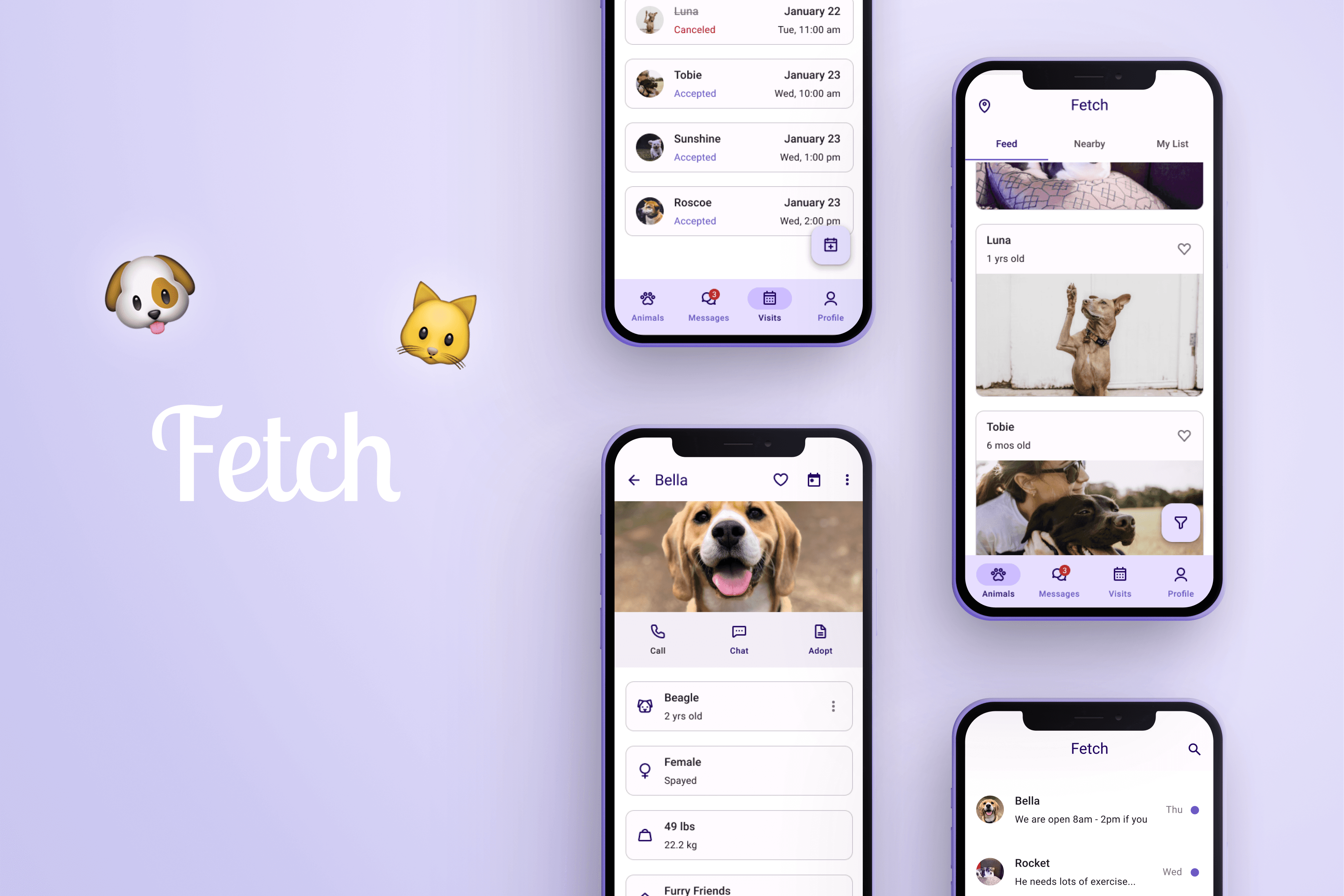
I led the product, UX, and research for Fetch, a mobile-first adoption app designed for a county animal shelter during COVID-era social distancing. Through competitive analysis, interviews with adopters and shelter staff, and audits of existing shelter sites, I uncovered gaps like outdated listings, scattered information, and no direct line to shelters. I then designed dual experiences—an adopter-facing discovery feed with rich pet profiles and preferences, and a shelter-side management flow—to centralize listings, streamline remote communication, and make responsible rescue faster and easier for both sides.
Timeline
6 months
Team
Product Designer
Role
Research, Design
Problem & Challenges
How can more animals be rescued while limited by social distancing restrictions?
Adopters have to visit shelters individually to see available animals
Adopters seeking particular traits have to spend additional effort competing
Shelters that rely on donations and volunteers often struggle to host and maintain websites with accurate information on available animals
Social Distancing
Socially distanced pet adoption strains shelters and adopters. Family visits are no longer available. Shelters limit the number of guests and allow visitation by reservation only.
Disseminated Availability
Adopters search a multitude of shelter websites to find an animal they would like to adopt; after submitting an application they find out the animal is no longer available.
Outdated Listings
Shelters work hard trying to keep up-to-date information for their animals online. The shelters then need to review applicants for fit as they come in on a first come first serve basis
Opportunities
Individualized Adoption
With personalized profiles, adopters and shelters can provide adoption criteria and preferences. Animal profiles can be discovered by adoptees in a way that sorts animals based on preference and adoption criteria.
Visual Contact
Virtual interaction can provide adoptees a remote method of interaction with pets to get a sense of the animals personality. Adoptees could contact shelter/foster pet caretakers to coordinate video chat to help adoptees make more informed decisions.
Direct-Line of Communication
Through connecting adoptees directly to shelters and foster caretakers, the adoption process can take place entirely online, can be expedited and can allow participants to have access to pet profiles and caretakers for questions that come up.
Competitive Analysis
The competition focuses on web platforms for adoption
I analyzed 3 of the most popular adoption websites and mobile applications surrounding the goal of socially-distanced adoption. I found that none of them support communication with shelters. These apps prioritize supporting shelter management or animal profiles sharing. This leaves a gap for a mobile-first application focused on efficient animal discovery and adoption/visitation inquiry that requires minimal effort by shelters.


Research Goals
1.
Identify Issues, Values, Processes
2.
Discover Pain Points and Needs
3.
Locate Barriers and Obstacles to adoption
4.
Determine barrier to entry for Online Platforms
Interview Questions

Adopters
Questions about adoption experiences, process and motivators.
Shelters
Questions regarding information availability for animals and other adoption services.
Adopter Insights
Look for animals with particular characteristics such as age or breed.
Ideal preferences that are scarcely found in shelters are competitively sought.
Many shelters are overflowing with less desirable breeds.
Need to revisit shelters or check others to find their ideal rescue.
May have to apply to many shelters to find available animals.
Begin with expectations but may adopt based on emotional response.
Shelters often don't have enough time to collect detailed animal information.
Some animals come with behavioral tests, bite history, medical conditions.
Detailed information often needs to be determined through visitation.
Shelter Insights
Vary in their capability to provide adoption services based on donations.
Can afford in-house veterinarians and behaviors specialists, others cannot.
Foster programs enable the community to ease the burden of sheltering.
Services such as foster-to-adopt and fee sponsorship enable adoption transition.
Smaller less established shelters may entirely lack online adoption platforms.
Key Solution
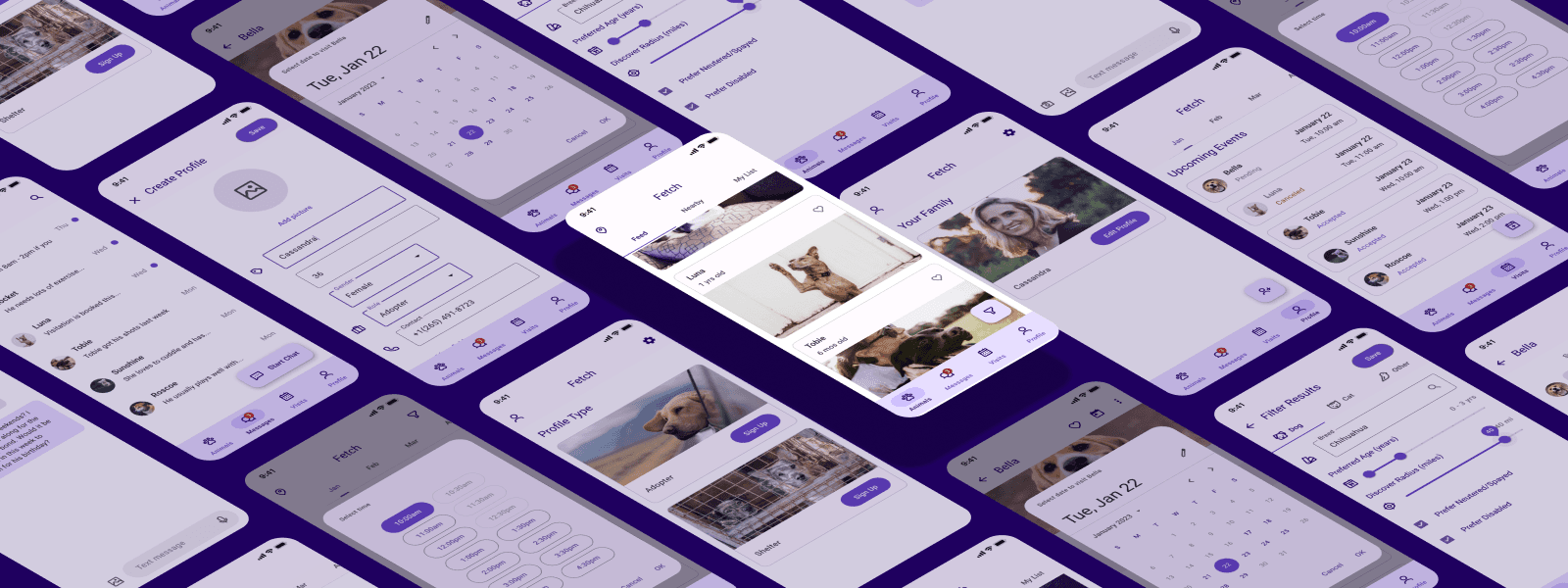
The key solution was a two-sided, mobile-first adoption flow that connected adopters and the shelter through one clear path—from pet discovery and richer profiles to a streamlined application and visit scheduling. By centralizing listings and making next steps explicit for both sides, the app reduced missed handoffs and kept the adoption process moving even when in-person coordination was limited.
Final Outcome
Fetch shipped as a mobile-first adoption app that helped a county shelter keep adoptions moving when in-person visits were limited. The final product brought the essentials into one place: easier pet discovery with richer profiles, a simpler application flow, and scheduling support for remote or virtual visits—so adopters could move from interest to next steps with less friction, and shelter staff had a clearer way to manage and respond.
The project evolved from early research and audits that exposed common breakdowns—stale listings, scattered information, and unclear ways to contact the shelter—into a focused set of end-to-end flows designed around what both sides needed most. Each iteration tightened the handoffs between adopter and shelter, clarified status and next steps, and shifted the experience toward a more reliable, remote-friendly process that could scale beyond a single conversation or phone call.

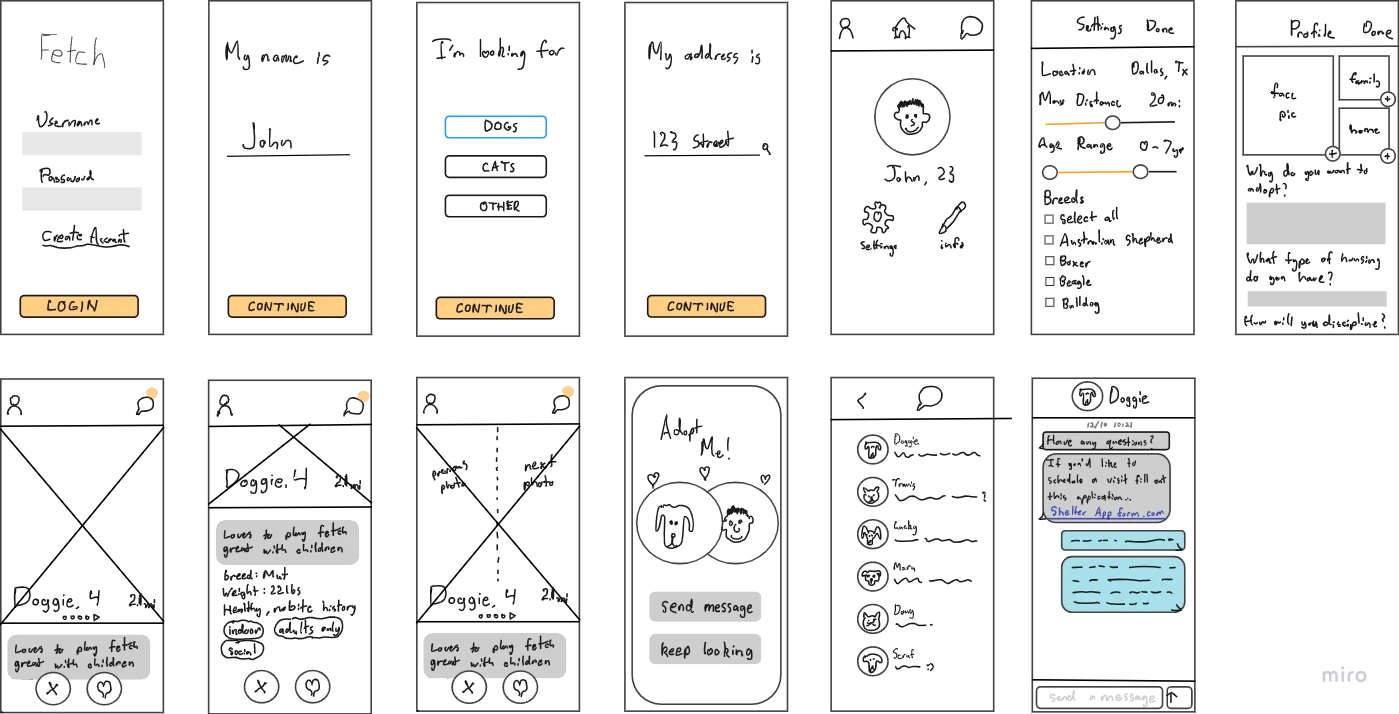
Adopter Flow
Simple onboarding for adopters help them create profile with basic information and pet preferences. Discovery of pets was designed to snapshot animal info and connect adopters to the shelter in charge to coordinate visits and applications.

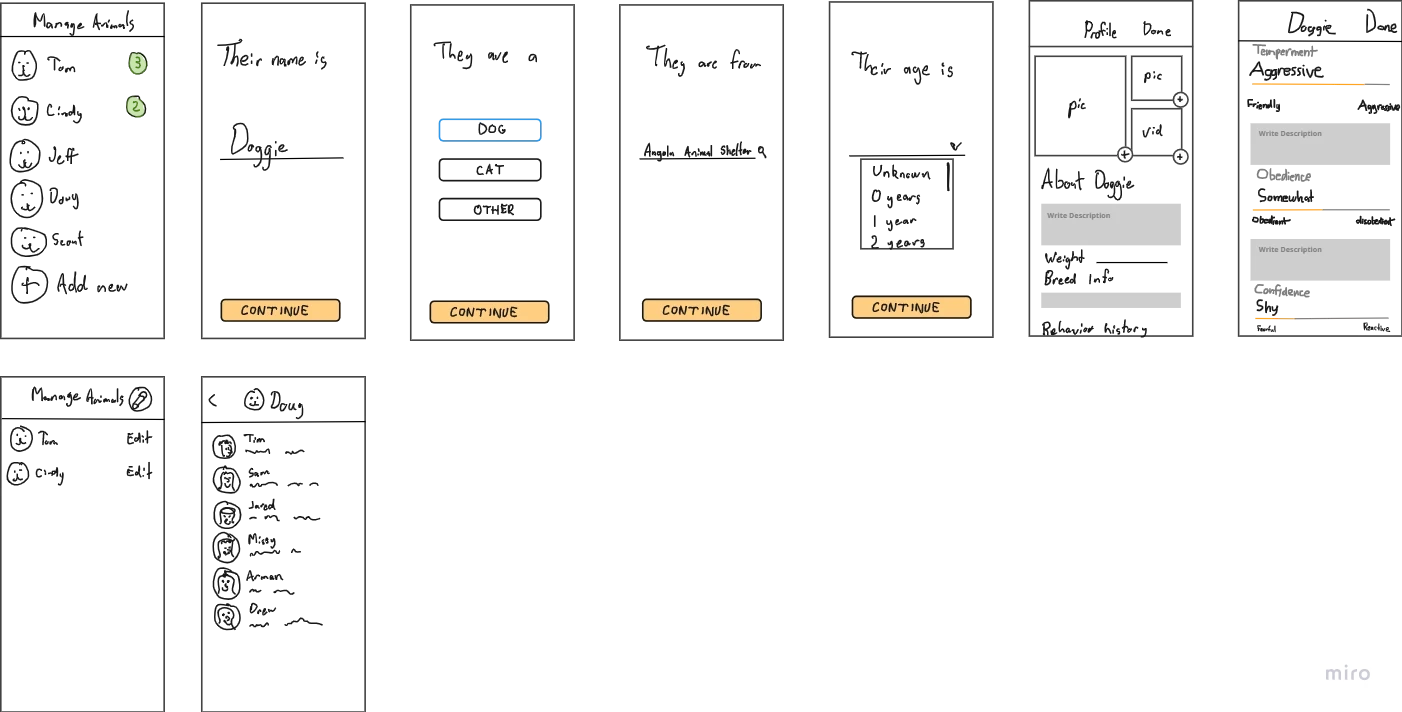
Shelter Flow
Shelters can create profiles to present their available animals with any available information. Adoption and visitation can be directly coordinated with prospective adopters through mobile communication.

Switching to a Discovery Feed
Improving animal shelters while connecting more pets to loving homes.
Externalizing the Application Process
Find your new best friend. Browse pets from our network of shelters and rescues.
Next Steps
With the core adoption flow validated, the next phase is expanding the network—bringing more shelters onto the platform and making the experience more useful for the community around them. That includes simplifying shelter onboarding (data intake, listing updates, and application handling), creating a lightweight rollout kit so new shelters can launch quickly, and adding clear guidelines to keep listings accurate and timely.
In parallel, I would deepen community involvement by partnering with local non-profits to support outreach and engagement—co-promoting adoptable pets, sharing education and volunteer opportunities, and driving repeat visits through community events and coordinated campaigns. The goal is to grow adoption capacity without increasing staff burden, while making it easier for adopters to discover, apply, and schedule with confidence.