UX DESIGN
AI AGENT
Agentic Marketplace
An agentic marketplace that helps buyers and sellers move surplus inventory—equipment, materials, ingredients—faster and with more confidence. Designed around intents like search, compare, list, and negotiate, with trust and structure built in so the agent can actually do work.
Timeline
1 month, 2026
Team
Solo
Role
Design, Strategy, Architecture
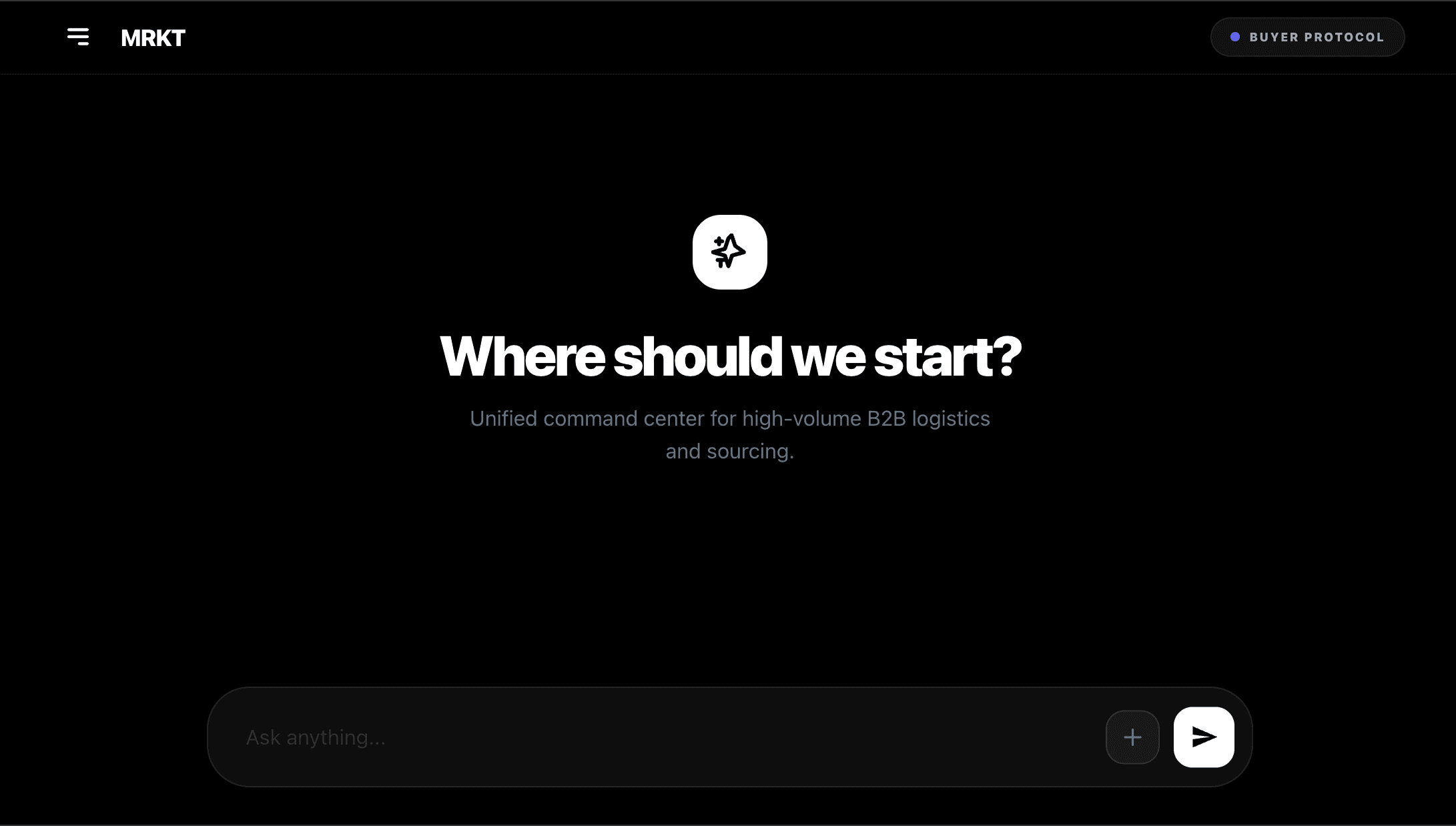
Disposing of unused materials can cost up to $250 in disposal charges and an additional $150 in logistics.
Problem
Excess material comes at the cost of storing and disposing of ingredients whose projects or contracts have been terminated. There was no way for these materials to be sold or purchased.
Solution
Create an agentic marketplace where excess could be listed, searched and traded at fair prices by brands and manufacturers that could make use of it.
Outcome
The agentic marketplace provides a place where manufacturers can find ingredients without any MOQ, negotiate for fair pricing while protecting anonymity.
The conversational AI agent helps facilitate searching, listing and ordering materials while acting as the middleman for orders, making sure each party provides and receives proper documentation.
How do you make it easy for busy executives to list and search for raw materials and facilitate transactions?
Previous Iterations
Over time, this problem has been validated through MVPs. It was scaled by creating a dedicated platform. Then it was prototyped to see the possibilities of listing inventory.
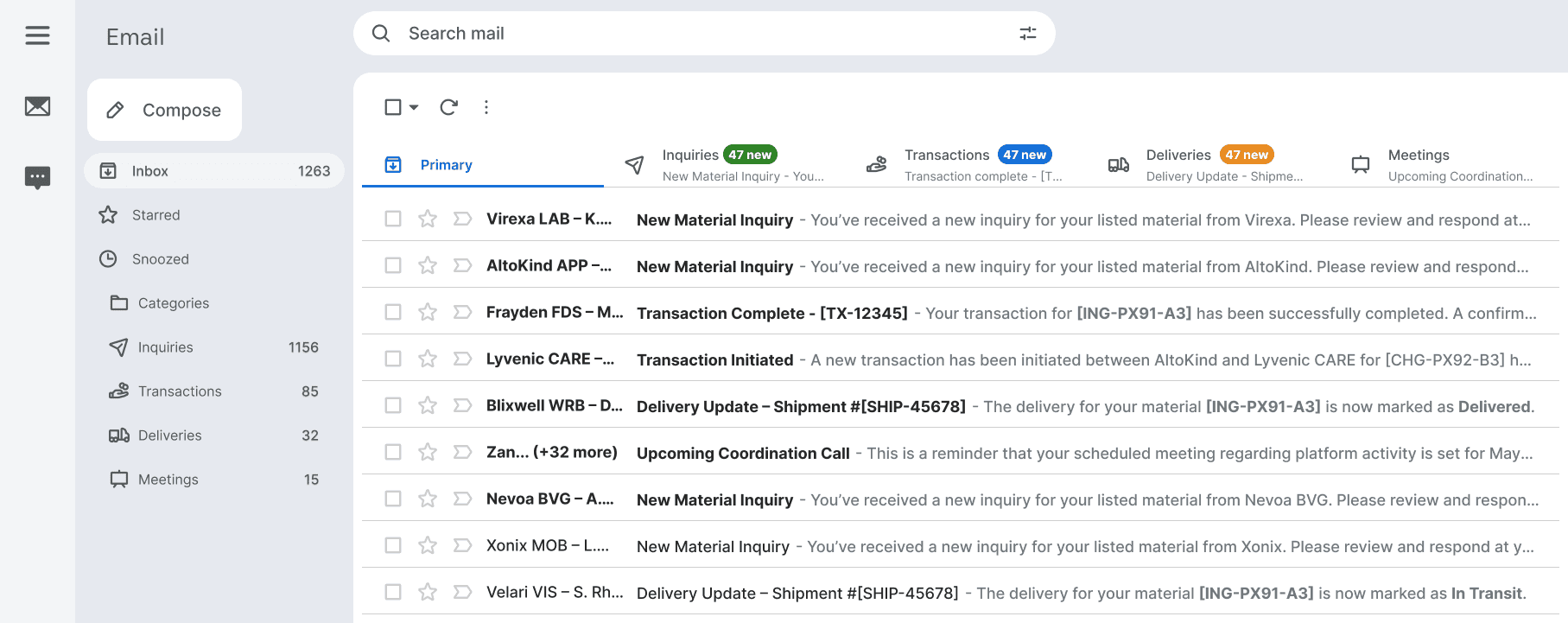
After we validated the problem, we were inundated with maintaining chaotic email threads.
Once we had a platform, users became disengaged with the spam of incoming inquiries.
Once inventory could be uploaded, searching, maintaining inventory, and managing orders became overwhelming
Email-based inquiries
Early iterations required significant participation to result in successful transaction matching, but this allowed us to validate that our users had the need and willingness to participate in order to make sales and purchases.
Inquiry-based trading platform
Creating the inquiry-based platform allowed us to transition away from email, allowing users to share inquiries and responses on a dedicated platform, reducing middleman involvement significantly.

Exchange marketplace
This project was a prototype, a way to picture what the product could become if we opened it up into a real marketplace. This version features full inventory listing, documentation, and order management.

Evolving the approach
The next iteration moves from a marketplace that connects people to a marketplace where AI actively facilitates the exchange — reducing friction, protecting anonymity, and enabling smarter transactions.
Research
With an agentic approach, the challenge shifted from building a marketplace to designing how AI could navigate uncertainty. Real-world commerce is messy — needs change, information is incomplete, and decisions require context. This research focused on understanding where AI could create trust, reduce friction, and help users make better decisions.
Challenges
Research showed that agentic commerce requires a new interaction model. Since intent changes throughout the transaction, the experience moved beyond fixed workflows toward an intent-first system with adaptive entry points, clear states, and trusted AI guidance.
Design Decisions
AI-Assisted design process
AI changed the way I explored the product. Instead of designing around fixed assumptions, I used AI-assisted workflows to quickly test interactions, evaluate edge cases, and refine how the experience should adapt to user intent.
The focus remained the same: using AI to accelerate exploration while keeping product judgment at the center.
Conversation creates flexibility but hides capability. The design challenge was making the agent’s abilities discoverable while keeping interactions natural and adaptive.
Prompts express intent, not instructions. Designing an agent-driven marketplace meant creating the bridge between vague user intent and actionable outcomes through better context, guidance, and decision support.
Success Metrics
As an experimental prototype, this concept has not yet been launched or validated with real marketplace activity. The next step is user testing to evaluate workflow effectiveness, measure success metrics, and refine the experience through real-world feedback.
Successful Match Rate
Can the agent connect users with the right opportunities?
Time to Value
How quickly can users reach a meaningful outcome?
Intent Resolution
Can the agent understand what the user actually needs?
Transaction Confidence
Do users trust the agent enough to complete an exchange?
Key Solution
A raw-material marketplace where manufacturers can sell excess inventory and buyers can source smaller quantities for pilots, R&D, or short runs that don’t meet minimum-order requirements. Listings follow a standard format, and the platform guides each trade step by step with clear confirmations so both sides can transact with confidence.
Filter and sort without the hassle
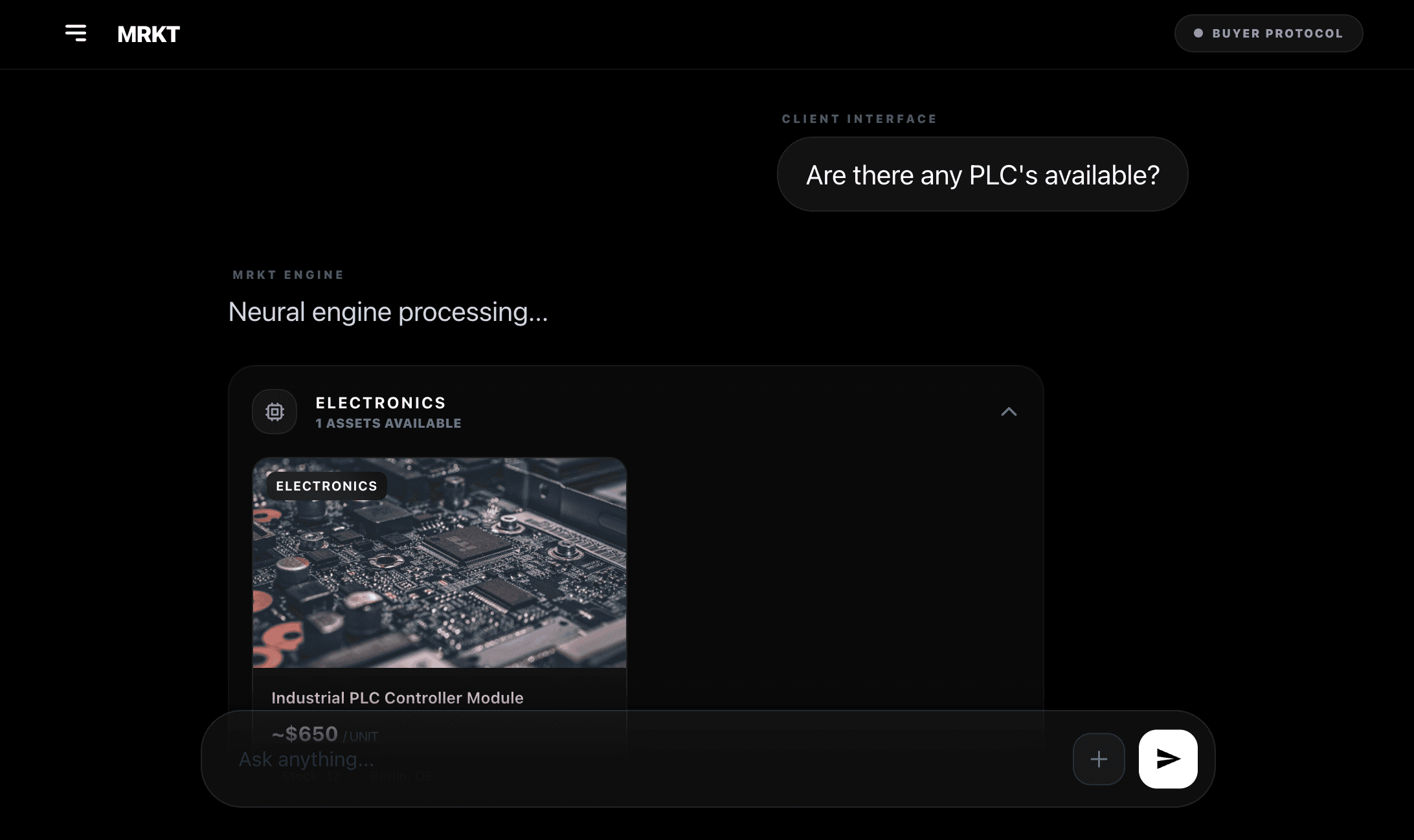
I designed the experience around intent-first conversations, where users describe their goals and the agent guides them toward relevant actions — whether finding, comparing, listing, or pricing materials.
This shifts the marketplace from page-based navigation to goal-based interactions, reducing friction while keeping the experience adaptable.
Simplified transactions
I designed orders around a shared transaction lifecycle rather than separate buyer and seller flows. Clear states and handoffs allow users to switch roles, maintain context, and understand what happens next throughout the exchange.
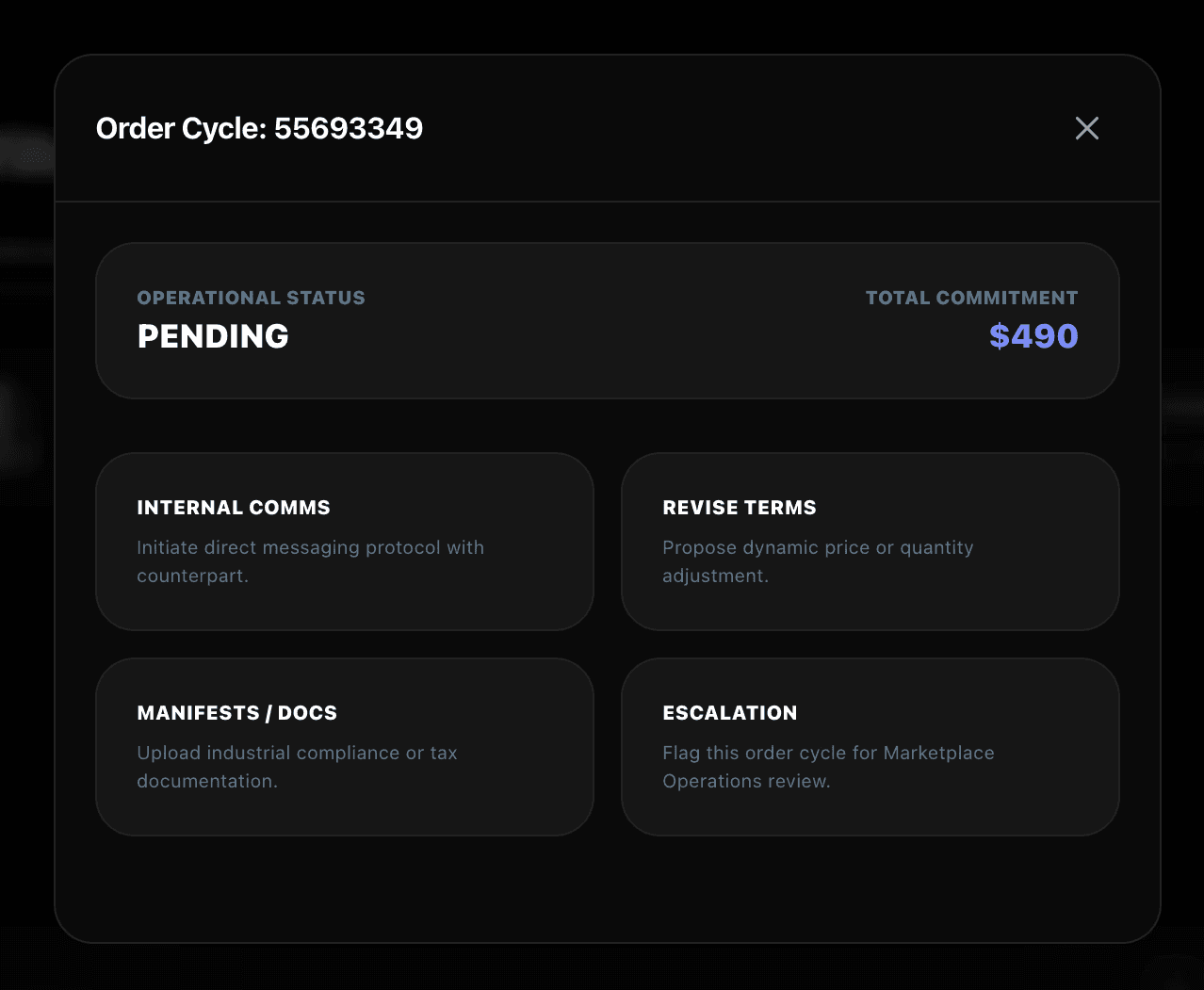
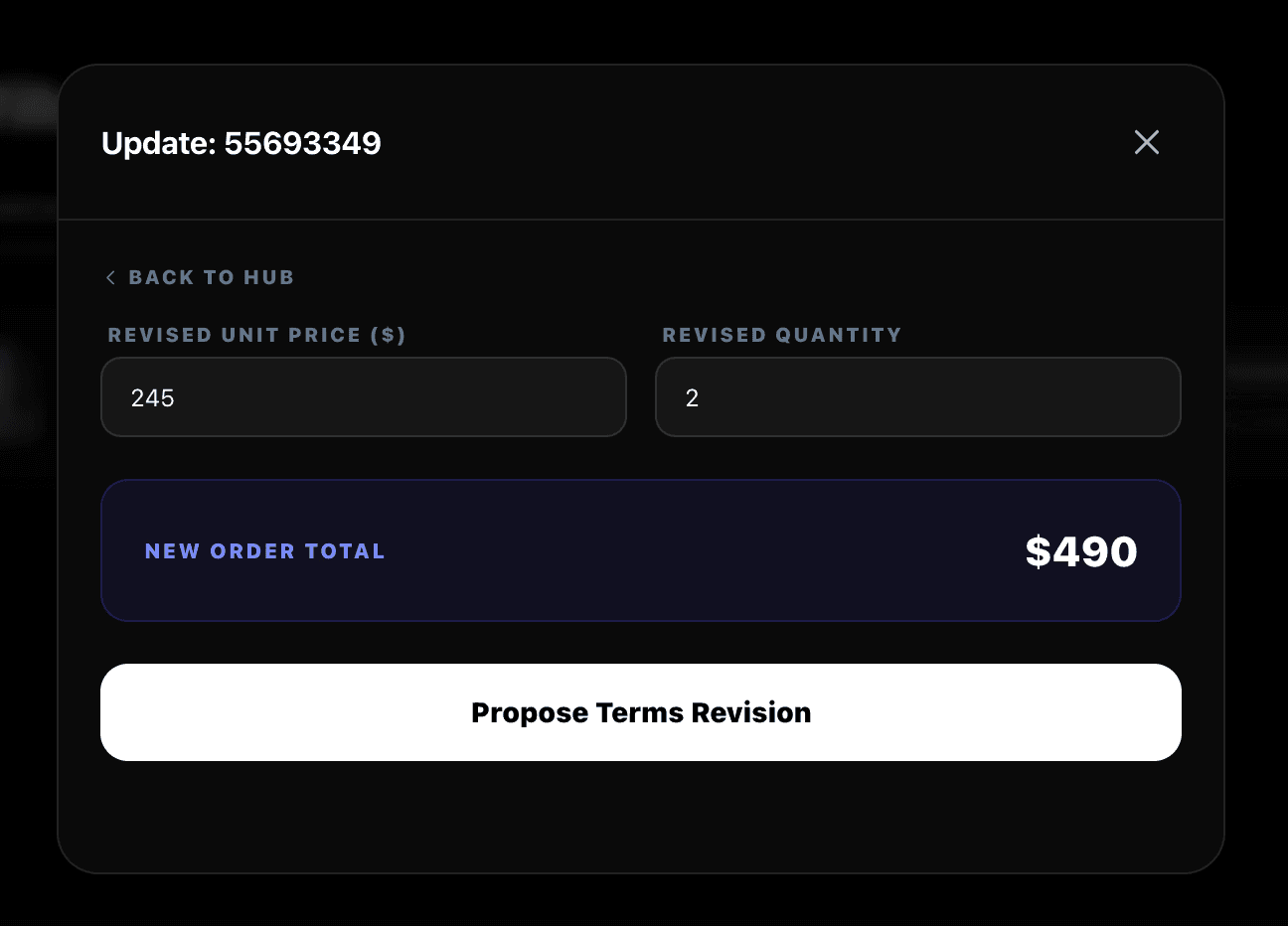
Agree on fair prices and services
I designed negotiation as a hybrid workflow: AI structures offers and key terms, while conversation handles the nuance of reaching agreement. This creates a more efficient and transparent process without removing human judgment.
Final Outcome
The final outcome was an agent-led marketplace concept designed around guided exchanges rather than transactional workflows. By connecting discovery, negotiation, and fulfillment through shared context, the experience explored a future where AI helps users make better decisions while reducing marketplace friction.

Next Steps
If this prototype moved toward a real product, the next phase would be validation and systemization.
First, I would test core workflows with users and stakeholders to validate intent flows, trust, and decision-making. Insights would then inform scalable patterns, design system updates, and operational guardrails.
From there, the product would be measured through real usage — tracking successful matches, time to value, user confidence, and areas where the agent needs improvement. The experience would continue evolving through phased launches and feedback loops.
